The NATIONAL AIR DISASTER FOUNDATION (NADF) was founded by air crash survivors and victims’ family members to raise the standard of Aviation Safety, Security and Survivability, and to Support victims’ families. NADF has proven to be an effective voice of reason, and often the conscience in the room promoting short-term and long-range solutions for the highest levels of aviation safety and security, so that others are not harmed.
Thursday, April 28, 2022, 1:00pm
Doors open 12 noon.
The National Press Club, in person (Press.org)
529 14th St NW, 13th Floor, Washington DC 20046
Families and experts will demonstrate Russian government involvement with three passenger aviation disasters killing 663 passengers from 23 countries. Polish family members, and from the Netherlands, U.S., and special guests will remember and provide important historical facts and the latest updates about the following:
“Smolensk” April 10, 2010, from Warsaw Poland to Smolensk Russia. Poland “Air Force One” Tu154M, PLF 101. Passengers included the President of Poland. First Lady, top government officials, and families of the Katyn victims. After 12 years, we are finally learning more about the Final Conclusions published recently, April 11, 2022. Thank you to all who worked so hard to complete the extensive and shocking report.
MH17, Malaysia Airlines July 17, 2014. Amsterdam to Kuala Lumpur. The Dutch-led Joint Investigation Team (JIT) has claimed that the MH17 plane was targeted by a Buk missile that belongs to the Russian armed forces. Learn more about the investigations, trial, criminal prosecution, and continuing legal actions from their dedicated family members.
KL007, Korean Airlines scheduled flight from NYC JFK Airport to Seoul, South Korea.
August 31, 1983. Shot down and crashed into the Sea of Japan by a Soviet Sukhoi Su-15 using air-to-air missiles, and allegedly being mistaken as a US spy plane.
Source for information: Wikipedia “Korean Airlines flight 007”
The challenges continue for the international community as to how to serve justice for these crimes and, however rare they may be, other aviation terrorist attacks, so that others are not harmed.
Press Conference hosted by the National Air Disaster Foundation (NADF)
Family members are welcome to participate and to read the names to honor the 663 passengers before we adjourn.
CONTACT INFO:
Gail Dunham
GADunham@aol.com
(336) 430 – 5437 –cell/text
Open to media and guests. Everyone welcome.
If possible, please contact GADunham@aol.com if you plan to attend.
Current policy of the Press Club is to bring photo ID and proof of vaccination on phone or card.
Masks are recommended for crowded indoor groups, but not required.
August 2-3, 2019 NADF had our meeting with ISASI – International Society of Aviation Safety Investigators, in Atlanta GA at the Delta Aircrew Training Center. We always look forward to meeting with ISASI, and had a great meeting. Activities even included flying a simulator. Because of covid we have not had our meetings, but hope to meet again in the future.
We extend our solace to the family and friends who have lost loved ones, passengers and crew on MH17 July 2014. The investigation and legal actions continue.
Trials for MH17 disaster continued at The Hague, the International Court in the Netherlands.
The family members and the global traveling public deserve an independent International Criminal Investigation, humane services to remember the for the souls on board, and much more.
Feel free to send us an email. Click here

Thank you to Nick Anderson, Artist and Illustrator.
 On behalf of our members worldwide our thoughts and prayers are with the family members of MH370 as they search for the truth.
As family members, we understand the “need to know” and the world must learn more about this aviation disaster. We support the MH370 family members
The search continues for seven years to locate the aircraft, the important black boxes, and for a proper air crash investigation for the probable cause of MH370.
Feel free to send us an email. Click here
Looking Back…Looking Forward…
When we first met In 1992, 30 years ago, it was a challenge to connect with international air crash family members without the internet, yet October 1992 survivors and family members gathered for the first time in Washington DC, and that first annual meeting led to NADF incorporation August 1, 1995. We met challenges then, and we are making significant progress today, while true to our Founding Goals.
We owe a special thank you to the CO3407 family members from the Buffalo crash Feb 12, 2009, as they passed landmark Aviation Safety Legislation. As a result, there have been no U.S. commercial plane crashes for over 12 years. NADF participated with the rulemaking following the legislation, as NADF membership in FAA ARAC and ASAC helped support the legislation during the rulemaking process.
NADF is here for the short-term and long-term.
On behalf of our members worldwide,
To keep up with more frequent NADF news follow TWITTER on our website, or join Jillian and over 2,000 followers on one of the most popular aviation TWITTER sites.
Welcome to Our Website
Our goal is to make it easier for you to access Daily Aviation News, receive email updates, contact our Board Members, reach out for Assistance, learn more about our Safety accomplishments, Goals and more. There are many ways for you to get involved:
- We remember loved ones – Check out Who We Are, How We Do It Who We Represent, and our Memorial Calendar. If your crash is not included, please contact us with the details (date, airline, where, type of equipment, etc.). If you would like to be a contact person for your group, let us know your name and full contact information.
- Aviation disaster websites. Please let us know if your disaster has a website or something specific such as historic information so that we are able to LINK to that information.
- Air Crash Memorials. Send us photos of your memorial, and information to share with others about how you established your memorial. Please send a CD copy of your memorial photos or photos that do not need to be returned to the NADF address, or let us know if there is a website link to your memorial. We look forward to hearing from you.
Gail A. Dunham Executive Director
A Special Request For Your Help…
Please send your annual donation of $20, or as generous an amount as you can afford, to the National Air Disaster Foundation today.
The NATIONAL AIR DISASTER FOUNDATION gives a special Sponsor recognition for your donation of $10,000 or more. Your donation will be held in Trust, and the interest income will be used to promote NADF programs, or for a specific purpose. As a Sponsor, you will be recognized, or you may remain anonymous if you prefer. The Trust assures our work for the future.
We need your help to raise the standard of safety, security, survivability, and support for victims’ families after these devastating aviation disasters.
Please let us count on your generosity and help us achieve these goals by sending your tax‑deductible contribution today to our address below, or make a secure online contribution by clicking here.
Thank you very much,
Matt Ziemkiewicz, President
P.S. Membership and other ways to help NADF
Past News
NEW! President’s Welcome from Matt Ziemkiewicz, Spring 2011
Click here for our September 2010 Newsletter. If you did not receive a newsletter in the mail, click here to request a copy.
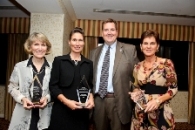
Aviation Safety Award to Dr. Takao Kawakita and to honor IREI Air Safety in Japan.
First NADA/F International Safety Award.
UPDATED! Memorial Calendar to remember our loved ones. If your crash is not included, or there are corrections, please let us know.
Photo Gallery Updates
The ICING Lawsuit End “Déjà Vu disasters!”
NADA/F filed a lawsuit against the FAA and the US DOT on February 24, 2009 on behalf of air crash family members and the traveling public to compel the DOT and FAA to end the 15+ years delays on regulatory changes to prevent aviation disasters such as Continental Connection 3407 on February 12, 2009 at Buffalo, NY, and many other icing disasters. The FAA did issue a Final Rule for airframe ice protection on August 3, 2009, however, there is still much work to do. Learn More.
VIDEO “Federal Government Slapped With Lawsuit”
Click play button to begin video.
| BOOK UPDATES! Check out our books library Some books may be purchased directly from NADF, and your donation will be tax‑deductible. Other books may be ordered from Amazon.com, and NADF will receive a modest commission from Amazon, at no extra cost to you. |
 |
We also accept new and used book donations for sale at our Annual Meetings, and to be sold on the website. Special thanks to the authors and members who have so generously donated their books to NADF.
To donate books, or to order BOOKS please contact NADF:
(888) 444-6232, or email NADF
NADF Bumperstickers – Only $2 Each!
Also great for your luggage or briefcase! Send a check payable to the National Air Disaster Foundation to our Washington DC address below, and we will mail them to you!